


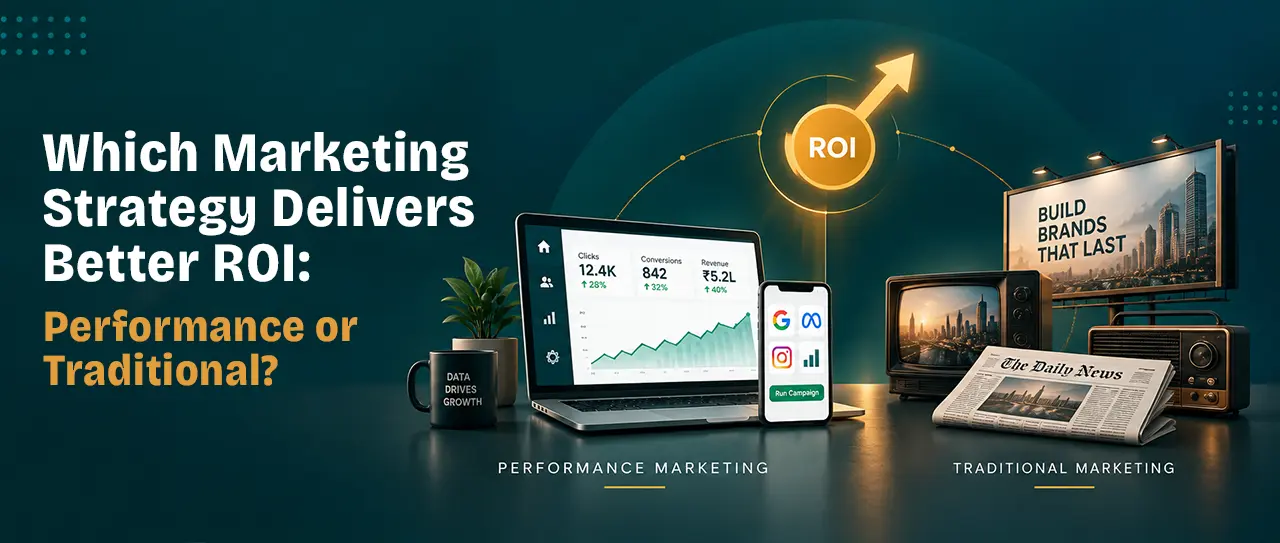
There are many ways you can do marketing these days, and the ways brands connect with their audience keep on changing. New trends and platforms continue to shape marketing in their own way, giving businesses more options than ever before. Some methods are still useful even though things have changed, because they adjust to how people now see and react to ads.
Traditional marketing has been used for decades, while performance marketing is a slightly newer way that uses data to track results and reach potential customers. Both methods have their own benefits, but deciding which one to use isn't just about which is more recent or widely used. It's about knowing what goals you want to reach, who you want to target, and which method works best with your budget.
What Is Performance Marketing?
A more focused approach, performance marketing involves operating campaigns around defined, measurable objectives. With a pay-for-performance model, brands only pay for results. Response to a campaign can be measured through concrete actions – for example, clicks, sign-ups, conversions, or purchases.
Typical examples of performance marketing include Google Ads, paid social media, display ads, affiliate marketing, and search advertising. Perhaps the most important strength of performance marketing is its ability to measure campaign effectiveness and adapt to it. Marketers can alter the audience, creative, budget, or strategy based on what works.
This makes performance marketing particularly useful for businesses that want greater visibility into where their marketing spend is going and what it is generating.
What Is Traditional Marketing?
Traditional marketing refers to the conventional methods used by businesses for decades to promote their products, services, and brands. This includes channels such as television, radio, newspapers, magazines, billboards, brochures, and other forms of print and outdoor advertising.
Unlike performance marketing, traditional campaigns are generally focused on reaching a large audience and building brand awareness, visibility, and recognition. While tracking direct conversions can be more challenging, these channels can help businesses establish a strong presence and stay memorable among potential customers.
Traditional marketing has continued to evolve alongside changing consumer habits, proving that older marketing methods can still have a place in a modern marketing strategy.
Performance Marketing vs Traditional Marketing: Key Differences
Both approaches aim to connect brands with customers, but they differ in how they reach audiences, measure results, and use marketing budgets. Here's a quick comparison:
| Factor | Performance Marketing | Traditional Marketing |
|---|---|---|
| Primary focus | Measurable actions and conversions | Reach, awareness, and brand visibility |
| Channels | Google Ads, paid social, display, affiliate | TV, radio, print, billboards, outdoor |
| Targeting | Highly specific audience targeting | Generally broader audience reach |
| Measurement | Clicks, leads, conversions, ROAS | Reach, impressions, response, brand awareness |
| Optimisation | Campaigns can be adjusted in real time | Changes may require more time and planning |
| Budget control | Flexible budgets and bidding options | Usually planned around fixed placements or campaigns |
| Speed of results | Often provides faster performance data | Results may take longer to assess |
| Best suited for | Lead generation, sales, and measurable actions | Awareness, reach, and long-term brand building |
Where Performance Marketing Has the Advantage
Performance marketing is what you want when you desire measurable results, specific targeting, and most importantly, control over your marketing spend. It can be tracked so closely that a marketer can tell in real-time what is working, what isn't, and make adjustments.
- Measurable results: click numbers, lead gen, conversion, and revenue.
- Precise targeting: Target based on interests, behavior, geolocation, demographics, etc.
- Flexible budgets: Start with a particular budget and spend more or less based on the campaign results.
- Real-time optimization: Underperforming ads, audiences, or creative can be swapped out.
- Faster feedback: Campaign data is available quickly and helps a marketer make good marketing decisions.
Where Traditional Marketing Can Deliver Stronger Returns
What old-school advertising does best is getting attention, spreading name recognition, and sticking in the mind over time. Sure, you might not see quick hits or click-through rates like online ads offer. Still, showing up regularly across various platforms shapes how people think of you – even if they can't quite place where they saw it. Long after a commercial ends or an ad fades from a page, the cumulative effect lingers.
- Mass reach: TV reaches wide. So does the wireless signal from the car stereo. Billboards tower above city streets. Newspaper racks stand near bus stops. Outdoor ads appear wherever people pass by.
- Strong brand recall: The name starts feeling like something you know. When ads keep showing up, the mind begins to notice. Recognition grows slowly but surely.
- Local visibility: Big signs along roads. Papers handed out near cafes work too. Radio voices often echo through hometown stations.
- Brand credibility: Media that's been around a while carries weight. Familiarity breeds confidence when it comes to buying. What feels common becomes comforting.
Which One Should Your Business Choose?
There is no one-size-fits-all answer when choosing between performance marketing and traditional marketing. The right approach depends on your business goals, target audience, budget, and the type of results you want to achieve.
If your priority is generating leads, driving sales, and tracking campaign performance, performance marketing can offer greater flexibility and measurable results. If your focus is building awareness, reaching a wider audience, or strengthening brand recall, traditional marketing may be a better fit.
For many businesses, the strongest approach can be a combination of both. Using performance marketing to drive measurable actions while traditional marketing builds broader awareness can help create a more balanced marketing strategy. The key is to invest based on what your business needs, not simply which channel is more popular.
Why Measurability Doesn't Always Equal ROI
Just because a marketing channel is easier to track doesn't mean it automatically delivers better returns. Performance marketing can clearly show clicks, leads, conversions, and ad spend, making its results easier to measure. However, traditional marketing can influence brand awareness, recall, and future purchasing decisions that may not appear directly in a campaign report.
For example, someone might see a billboard, later search for the brand on Google, and eventually make a purchase. The final conversion may be credited to the Google campaign, even though the billboard helped create the initial awareness. This is why businesses should look beyond individual campaign metrics and consider the overall customer journey and business impact when evaluating ROI.
ROAS vs ROI: What's the Difference?
ROAS (Return on Ad Spend) measures how much revenue a business generates from its advertising spend. It is mainly used to evaluate the performance of an individual advertising campaign.
ROI (Return on Investment) looks at the bigger picture. It considers the overall profit generated after accounting for the costs involved in running the business or campaign.
For example: if you spend ₹10,000 on ads and generate ₹50,000 in revenue, your ROAS is 5X. But that doesn't necessarily mean you made ₹40,000 in profit. Once you account for product costs, salaries, agency fees, shipping, and other expenses, the actual ROI could be much lower.
In simple terms: ROAS tells you how efficiently your ad spend generated revenue, while ROI tells you whether the overall investment was profitable.
Why an Integrated Marketing Strategy Can Deliver More
Not everything can be measured, and sometimes awareness is exactly what is needed. Awareness and performance marketing can be seen as two sides of the same coin; performance marketing builds off awareness created through traditional marketing. Awareness can be built through traditional channels, such as print or outdoor advertising, while performance marketing focuses on converting those aware consumers into actual customers through metrics like click-through rates and conversions.
A television or billboard campaign can be used to expose a business to a broad public, while online efforts target individuals who have previously demonstrated an interest. When used in tandem, these strategies foster a clearer link between visible presence and concrete outcomes.
Ultimately, an integrated marketing strategy allows businesses to use each channel for what it does best while creating a more balanced approach to reach, engagement, conversions, and long-term growth.
Final Verdict
While one method doesn't always come out on top, each has its strengths. Performance marketing tracks results clearly, zeros in on exact audiences, and adjusts quickly, which works well when generating leads, pushing for conversion, or demanding swift outcomes. In contrast, older styles often do better at sparking recognition and connecting with wider crowds, while leaving a lasting impression over time.
What works best depends entirely on your goals, audience, money available, and how buyers move through your brand. Some companies do best mixing both methods – starting with traditional to get noticed, then shifting to performance-based tactics to track real behavior.